
Key takeaways
- Matching new masonry is about size, color range, texture, mortar and joint style together.
- Mortar color is often what gives an addition away.
- Natural stone and manufactured stone can both look great when installed right.
- What is behind the veneer, the wall prep and flashing, decides how long it lasts.
The best compliment a masonry addition can get is that nobody notices it was added. Whether it is a new column, a garden wall, an outdoor kitchen base or a full brick veneer on a new room, the goal is the same: it should look like it was always part of the house. Here is what it takes to get there.
Matching brick
Brick is rarely a single color. Every brick blend has a range of tones, so matching means looking at the whole wall, not one brick. We compare:
- Size: standard, modular, queen and king brick all differ, and a size mismatch shows immediately in the coursing.
- Color range: the mix of light and dark bricks across the wall.
- Texture: smooth, wire-cut, tumbled or sanded faces catch light differently.
Older homes add a twist. Brick weathers over the years, so a perfect match to the original product can look new next to it. Sometimes a close blend with the right mortar looks more natural than an exact product match.
Mortar makes or breaks the match
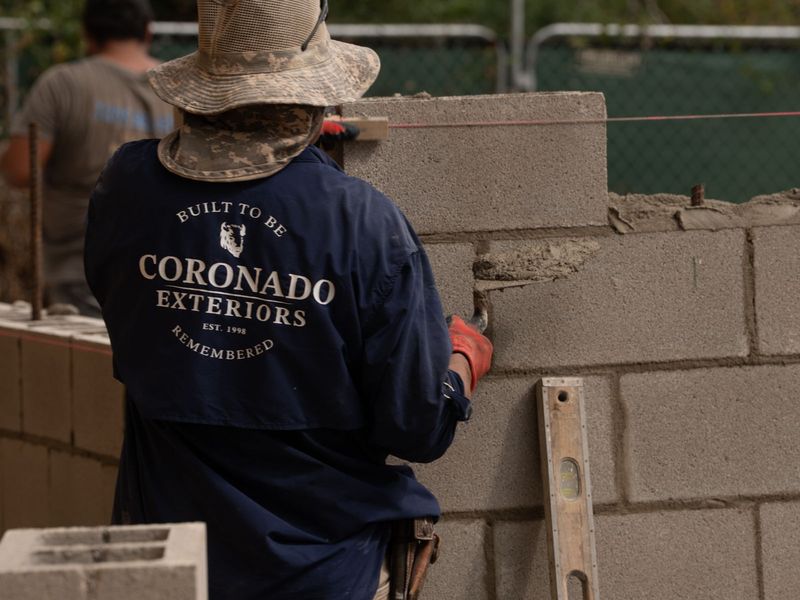
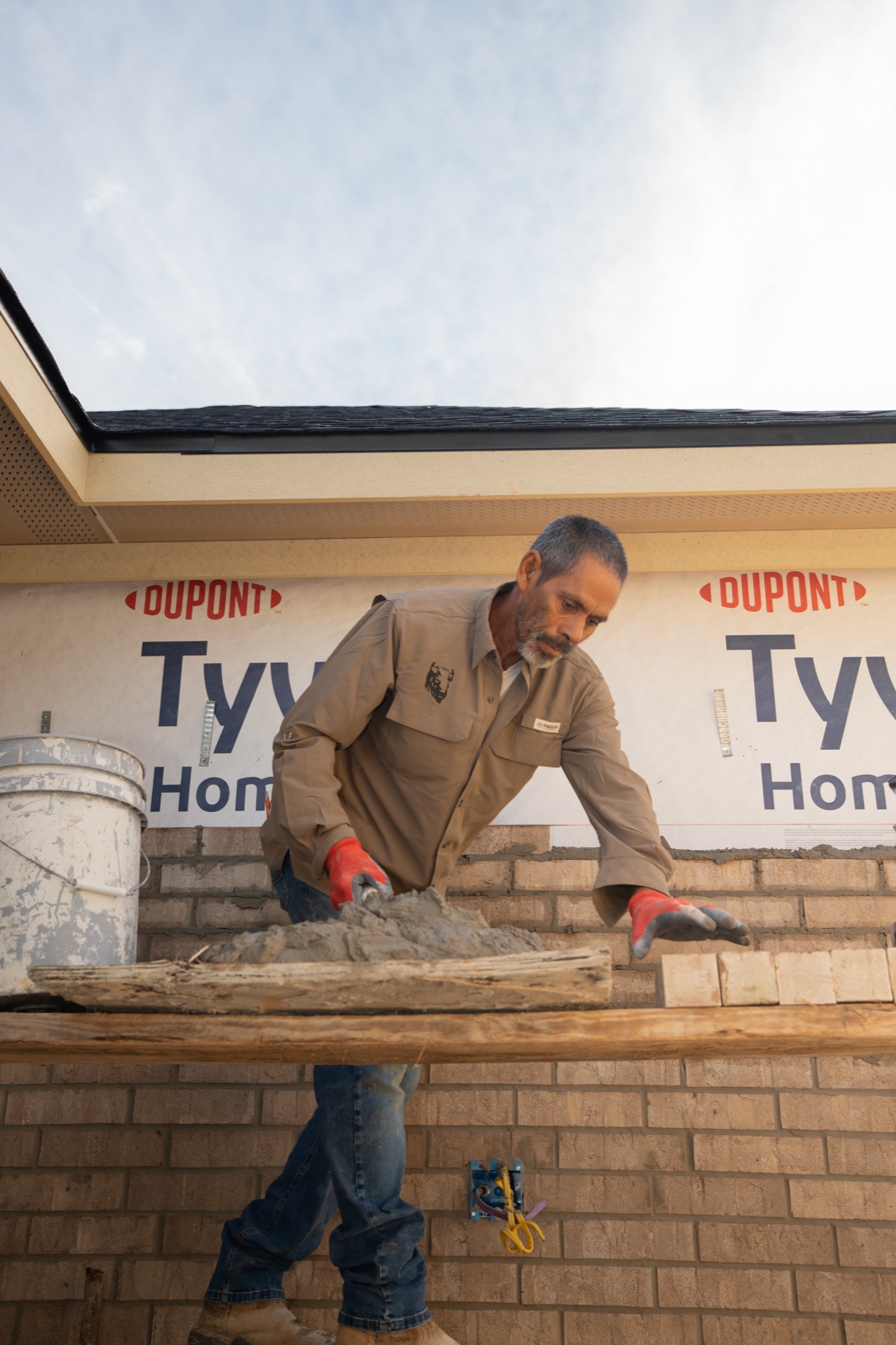
Mortar can be a large share of what you see on a brick wall. The right brick with the wrong mortar color is the most common reason an addition stands out. We match:
- Mortar color to the existing joints, including how it has weathered.
- Joint width so the coursing lines up with the original wall.
- Joint style, such as concave, raked or flush, which changes the shadows on the wall.
Natural vs. manufactured stone
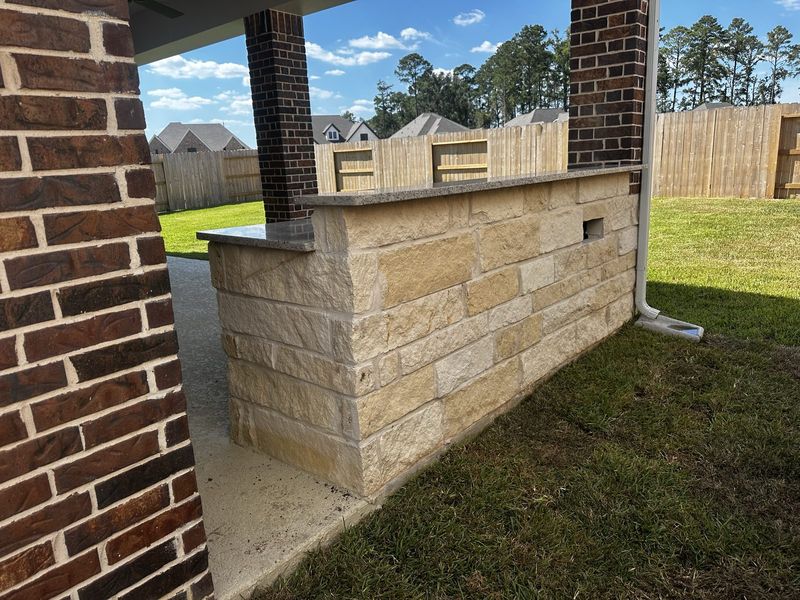
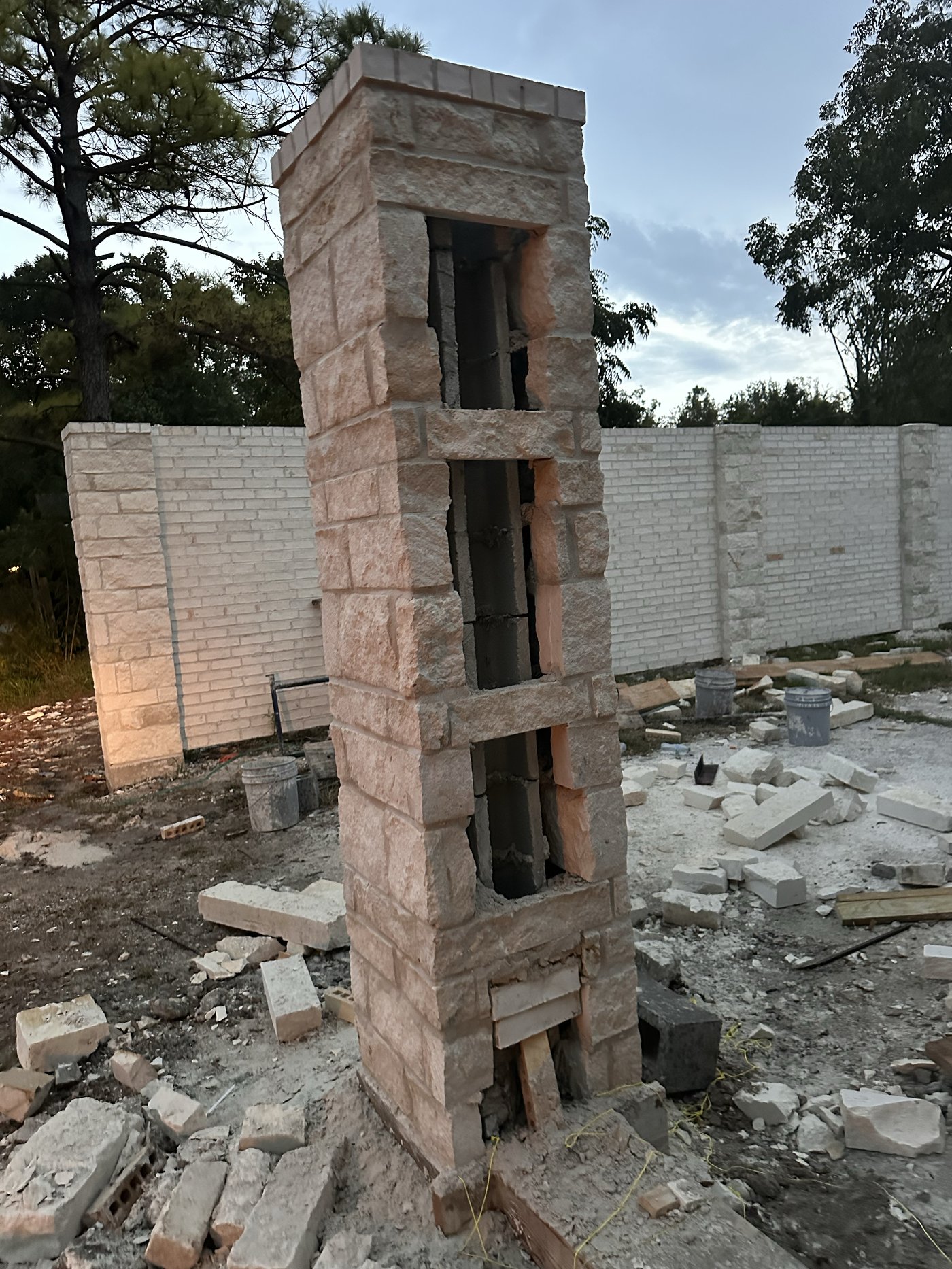
Natural stone, like cut limestone, Lueders or flagstone, is quarried and cut. Every piece is unique and it ages beautifully. Manufactured stone veneer is cast to look like stone. It is lighter and often more consistent in shape.
Both can look excellent. We help you choose based on the look you want, the budget and where it is going. Columns, kitchen bases, fireplaces and full walls each have different needs.
What is behind the veneer matters most
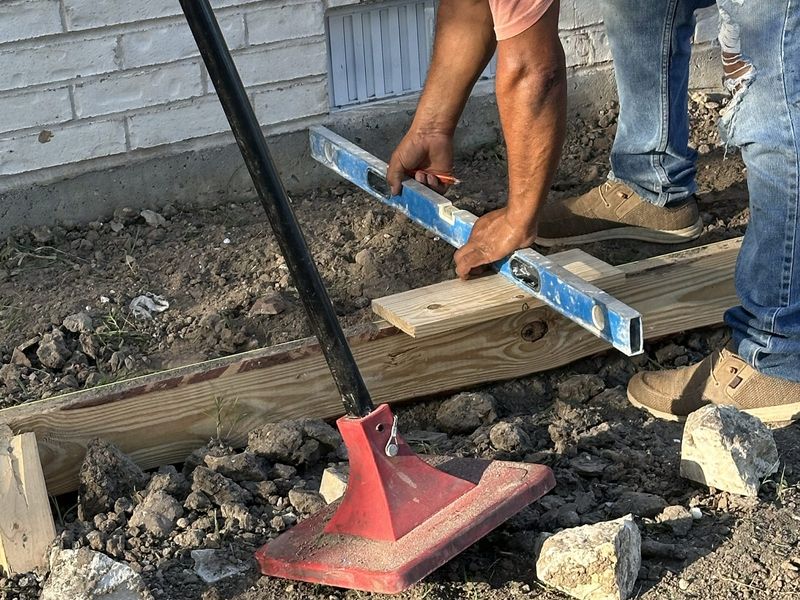
Veneer is a skin. It lasts as long as the structure and moisture control behind it. Done right, that means:
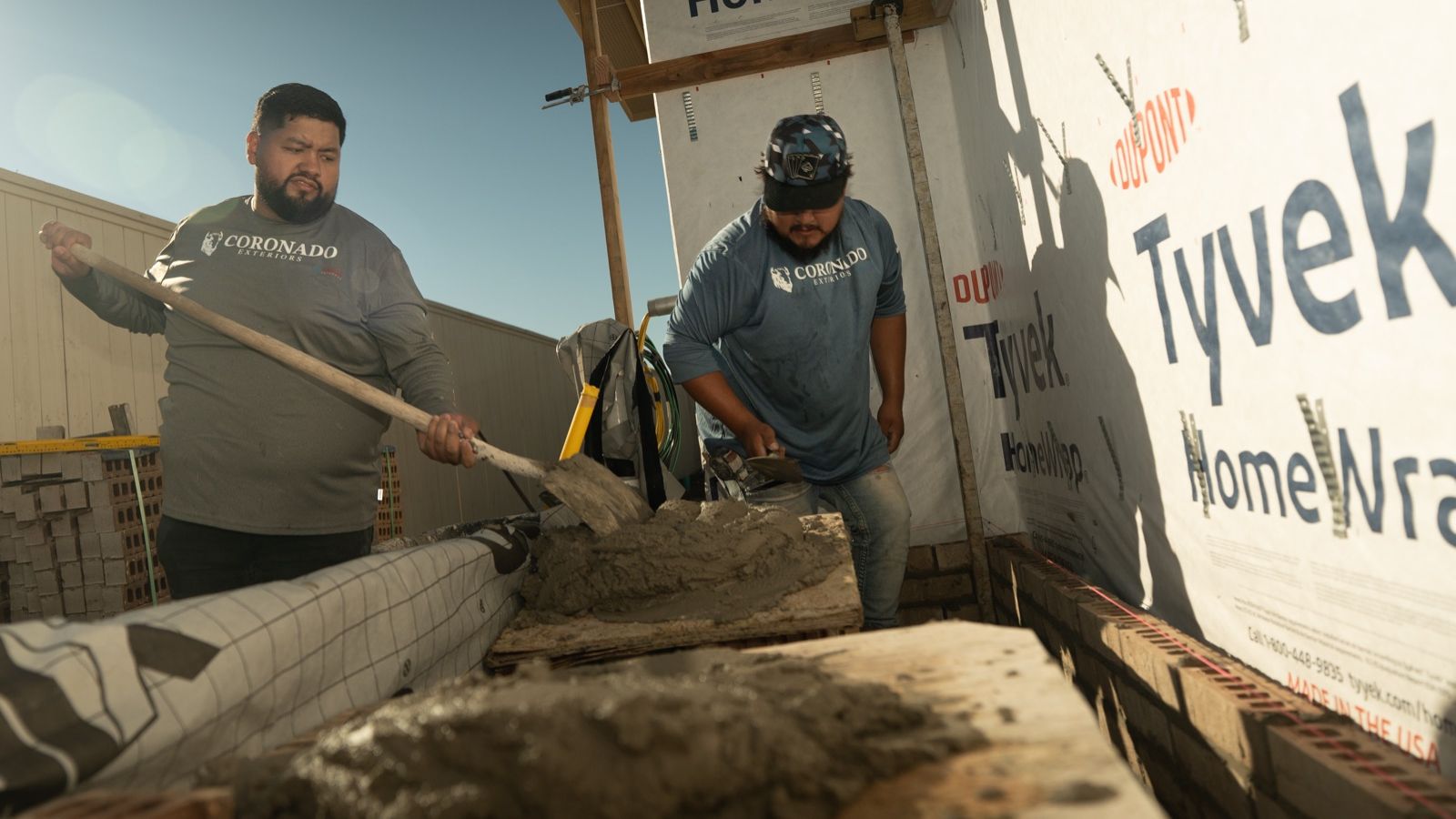
- Proper house wrap and flashing so water that gets behind the veneer can drain out.
- Wall ties that anchor the veneer to the structure.
- A solid footing or ledge under the veneer so it does not settle and crack on Houston clay.
Where matching matters most
- Room additions and garage conversions, where new walls sit right next to old ones.
- Columns and entry pillars at the front of the house.
- Outdoor kitchens and fireplaces that should feel like part of the home.
- Garden and privacy walls that frame the property.
Our masons spent years building brick and stone for some of Houston's largest home builders, so matching a production home's masonry is familiar ground. See our masonry services, or send us a photo of your home and we will talk through matching options.