
Key takeaways
- Houston's expansive clay swells when wet and shrinks when dry, and that movement cracks slabs and walls.
- A compacted aggregate base matters more than the surface on top.
- Steel, control joints and properly sized footings let concrete and masonry handle movement.
- Drainage is part of the structure, not an upsell.
Drive through almost any Houston neighborhood and you will see it: driveways split down the middle, garden walls leaning out of plumb, patios with one corner sunk lower than the rest. Most of those projects were not built with bad material. They were built on Houston clay without a plan for how that clay moves.
What makes Houston soil different
Much of the Houston area sits on expansive clay. When it rains, the clay soaks up water and swells. During a dry spell, it shrinks and pulls away. Few places in the country move this much with moisture, and our weather swings hard between heavy rain and long hot droughts.
Anything rigid sitting on top of that soil, like a slab, a block wall or a masonry kitchen, gets pushed up, let down and twisted a little every season. Over a few years, that adds up to cracks, heaving and walls that lean.
Start with the base, not the surface
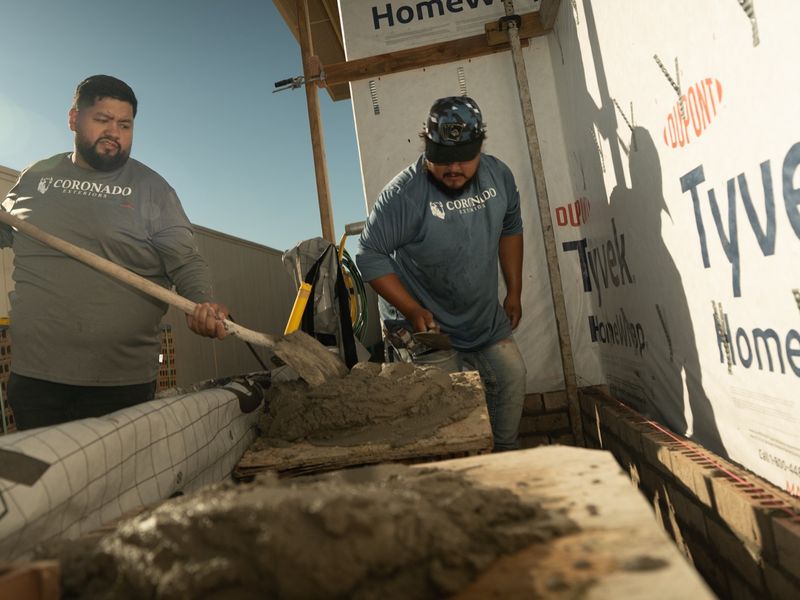
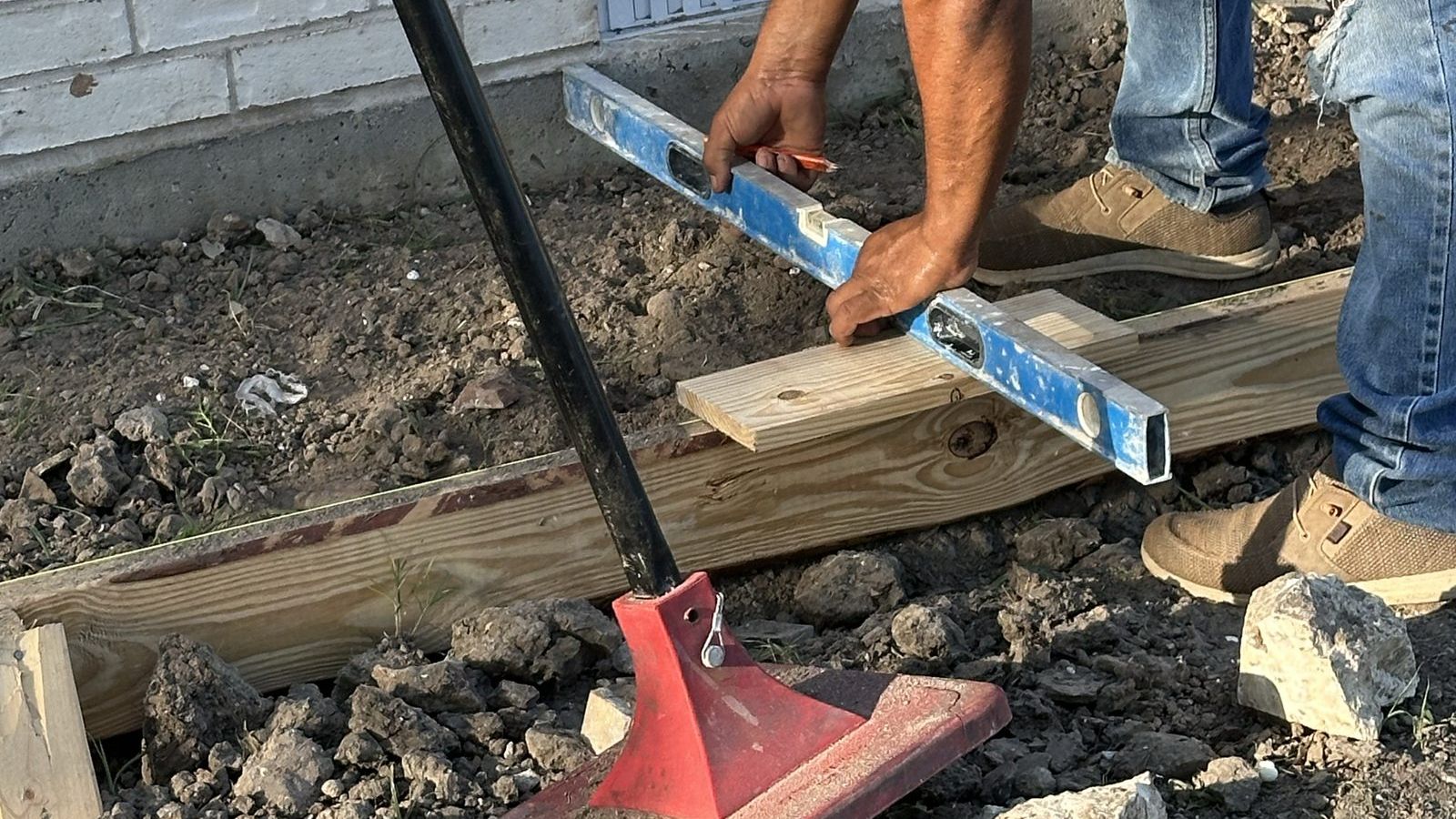
The surface is what you see, but the base is what decides how long it lasts. For driveways, walkways and patios, we excavate to the depth the project actually needs and compact a real aggregate base. That base spreads the load and gives the clay a buffer, so the surface moves as one unit instead of cracking at the weak spots.
- Pavers: a compacted aggregate base with edge restraints that lock the pattern in place under car weight.
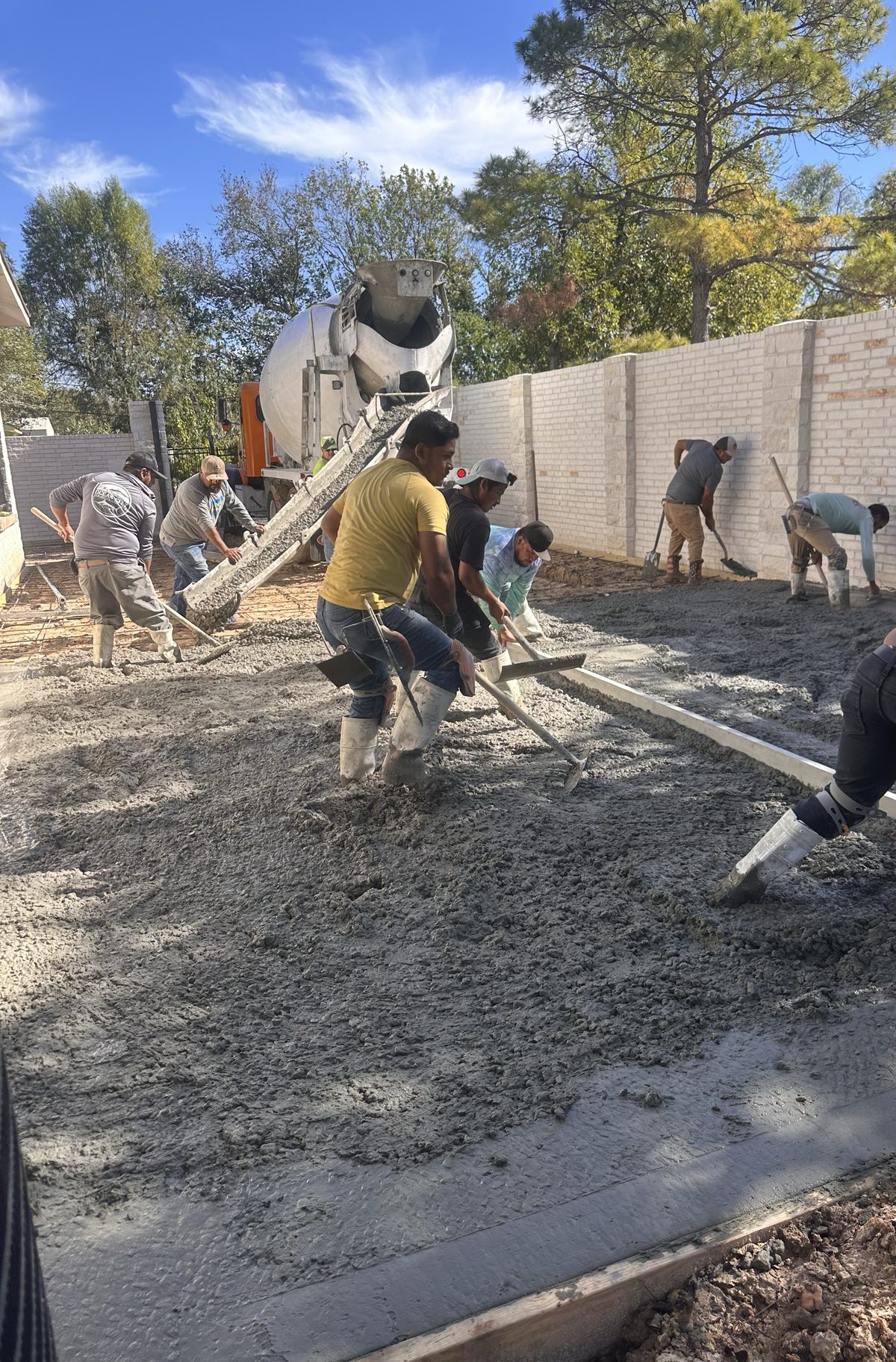
- Poured concrete: proper excavation depth and compaction so the slab does not settle unevenly.
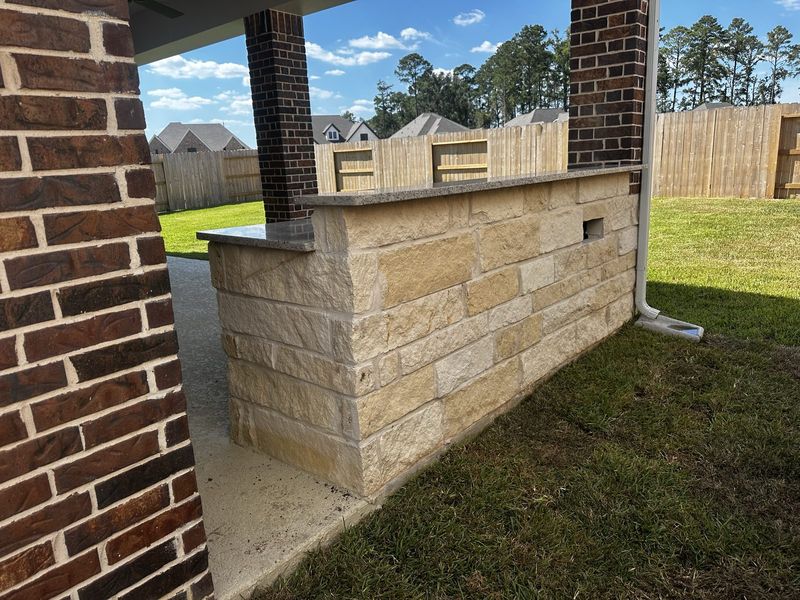
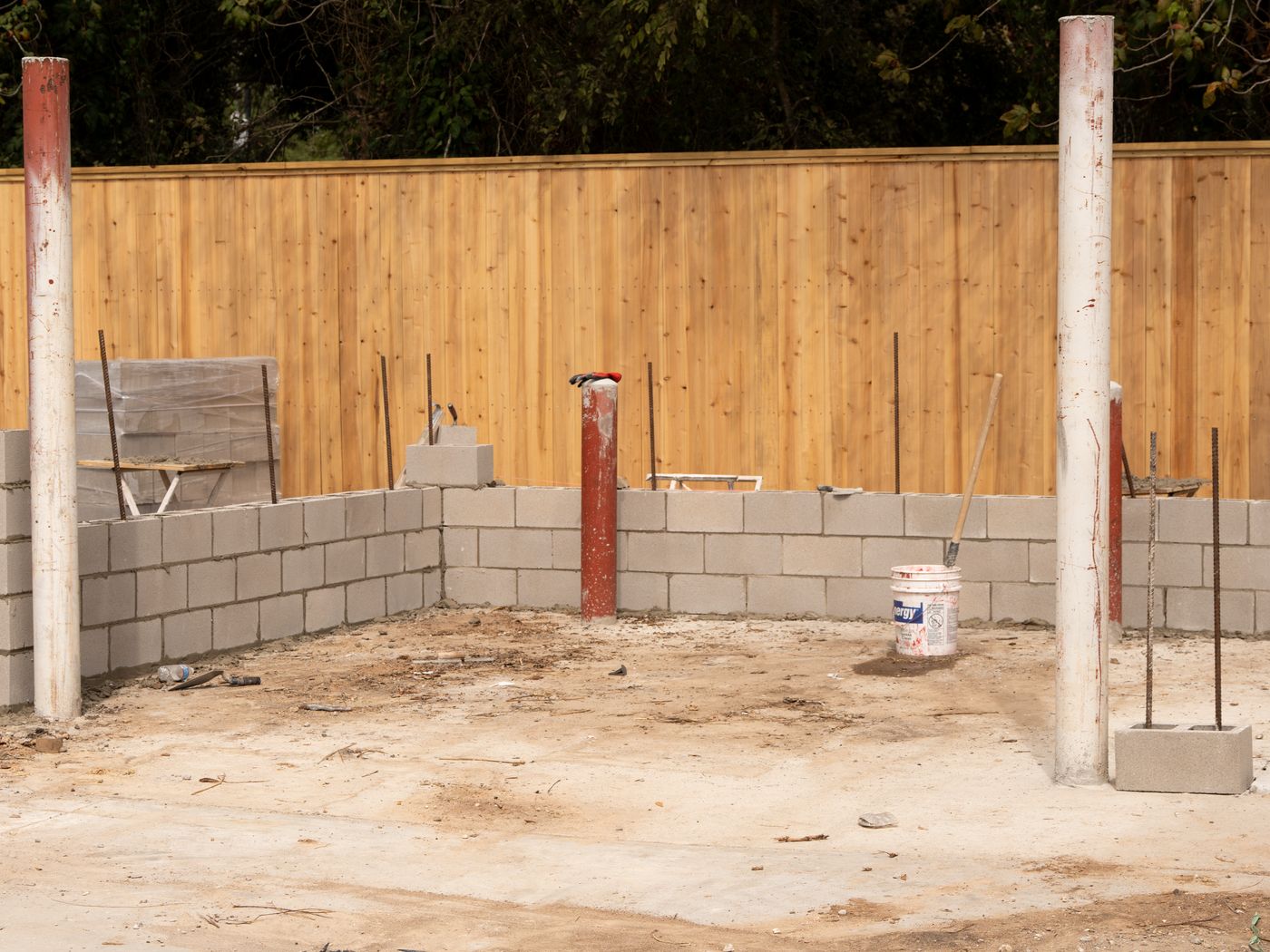
- Masonry: a concrete footing sized for the wall's height and load.
Give concrete room to move
Concrete will crack. The goal is to control where. Steel reinforcement holds the slab together, and control joints give it planned places to crack in a straight, clean line instead of a random split across the middle of the driveway.
Placement matters. We put control joints where the slab needs them structurally, not just where they line up with a pretty stamp pattern. On concrete driveways, that one decision makes a big difference in how the driveway looks after a few Houston summers.
Walls, columns and footings
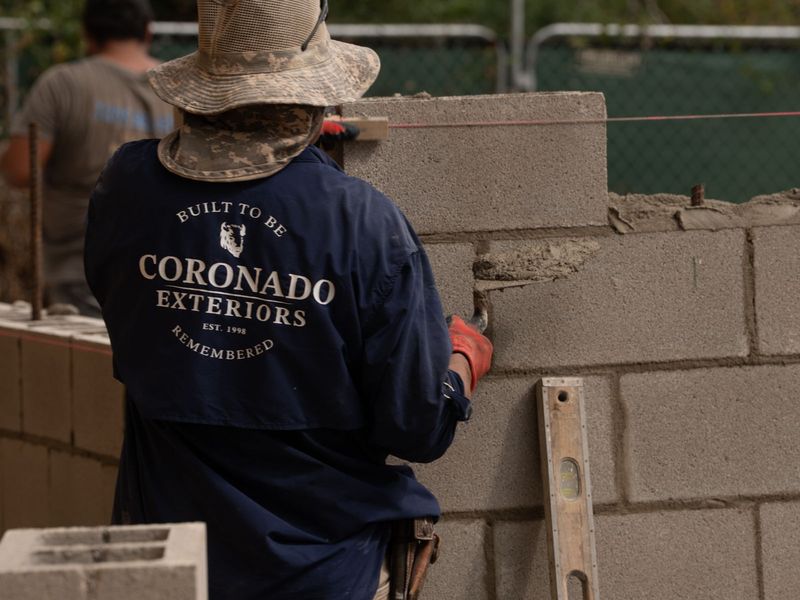
Garden walls, retaining walls, columns and CMU block walls fail when the footing is too small for the soil, or when water builds up behind them. We size each footing to the wall's height and load and the soil on your lot, then tie the wall to it with rebar and grout where the design calls for it.
Drainage is part of the structure
Water is what makes clay move, so controlling water is half the battle. Every driveway, patio and wall we build has a drainage plan.
- Driveways and patios slope away from the house and foundation.
- Retaining walls get gravel backfill and drainage behind them so water pressure does not push them over.
- Pool decks and patios shed water to the right place instead of pooling against the house.
Water pressure behind a wall is one of the main causes of retaining wall failure. That is why we include drainage with every retaining wall as standard, not as an add-on.
Which materials handle clay best?
Every material can work on Houston clay when it is built right. Pavers have one advantage: the surface is made of individual units, so it flexes and any single paver can be lifted and reset. Poured and stamped concrete can perform very well with the right base, steel and joints, and they cost less. We compare all three in our pavers vs. stamped concrete guide.
Seeing cracks in an existing driveway or wall? Schedule a free consultation and we will tell you whether it can be repaired or needs to be rebuilt right.