Key takeaways
- Broom-finish concrete is the most budget-friendly and very durable.
- Stamped concrete gives a stone or brick look at a lower cost than pavers.
- Pavers cost more but flex with clay soil and repair one piece at a time.
- All three last only as long as the base and drainage underneath them.
Your driveway is the first thing anyone sees when they pull up, and it takes more daily wear than almost anything else on the property. In Houston, the three options we build most are pavers, stamped concrete and broom-finish concrete. Each one is a good choice for the right homeowner. Here is how they compare.
At a glance
| Broom finish | Stamped | Pavers | |
|---|---|---|---|
| Upfront cost | Lowest | Middle | Highest |
| Look | Clean, simple | Stone, slate, brick or wood look | Real units, widest range |
| Repairs | Patch or replace sections | Hard to blend | Lift and replace one paver |
| Weeds and ants | None | None, no joints | Joint sand needs upkeep |
| Upkeep | Minimal | Reseal on a schedule | Top up joint sand, optional seal |
Broom-finish concrete
A broom finish is a poured slab with a light texture brushed across the surface for grip. It is the most budget-friendly option, and when it is built right it is tough and long-lasting. A contrasting border, either broom or stamped, dresses it up for a small added cost.
The key with any poured driveway in Houston is what you cannot see: excavation depth, a compacted base, steel reinforcement and control joints in the right places. Learn more on our concrete driveways page.
Stamped concrete
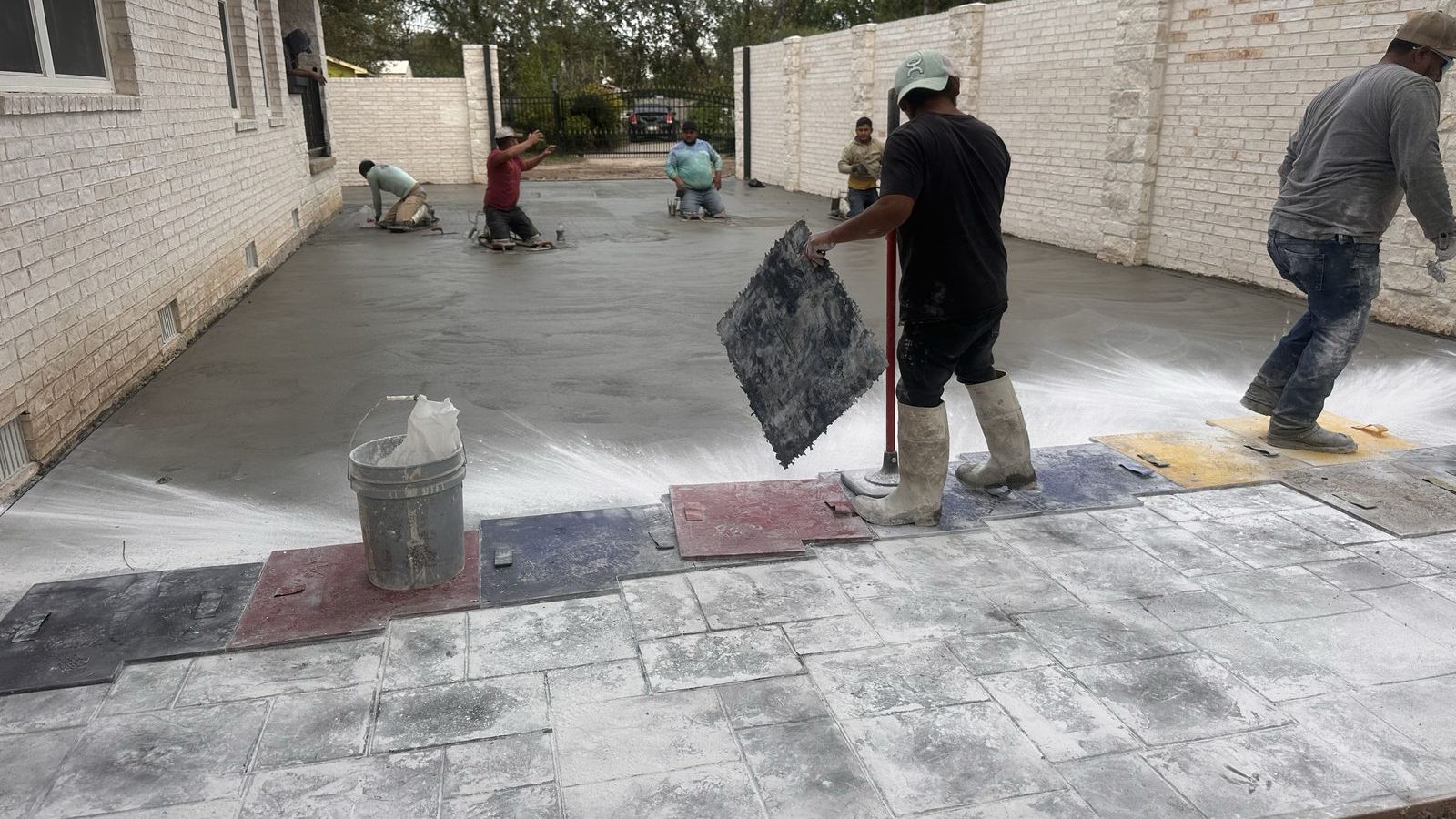
Stamped concrete gives you the look of flagstone, slate, cobblestone or even wood planks at a lower material and labor cost than the real thing. Color is mixed in or applied on the surface, and texture mats press the pattern into the concrete while it is still workable.
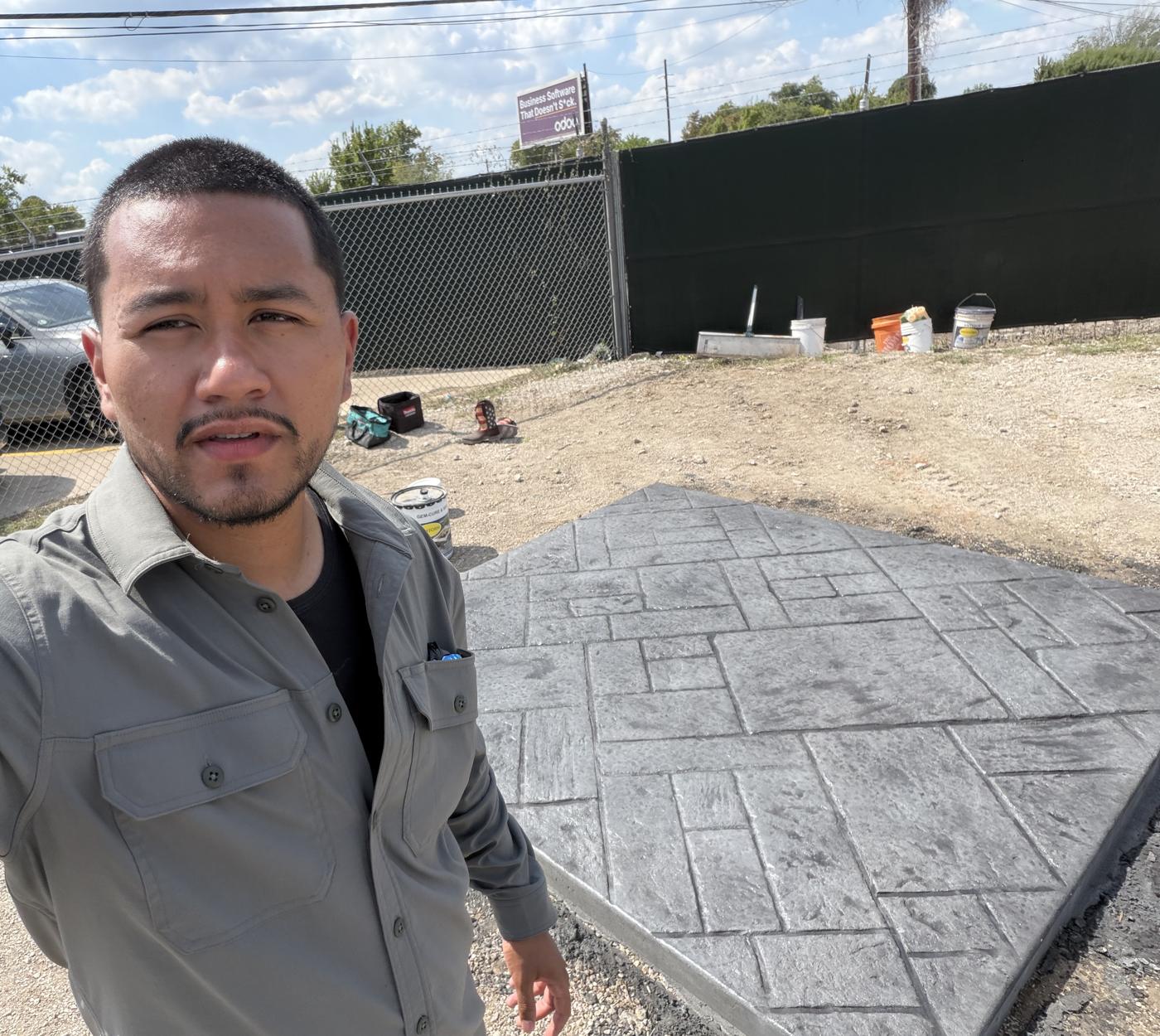
Stamped concrete lives or dies by how it is finished in the first hour, so crew experience matters more here than with any other driveway. Timing the stamp is everything. Too early and the pattern smears. Too late and it will not take.
- Pros: custom look for less than pavers, seamless surface with no joints for weeds or ants.
- Cons: needs resealing with a UV-stable sealer to hold color in Houston sun, and cracks are harder to hide than on a plain slab.
See patterns like ashlar slate, wood plank and large stone on our stamped concrete page.
Pavers
Pavers are individual concrete, clay or stone units set on a compacted aggregate base with joint sand and edge restraints. Because the surface is made of many pieces, it flexes as a unit when Houston clay moves instead of cracking.
The biggest practical advantage is repair. If a paver gets stained by oil or damaged, it can be lifted and replaced without redoing the driveway. Pavers also come in the widest range of styles, from Old World tumbled stone to clean, modern large-format units.
- Pros: premium look, easy spot repairs, handles soil movement well on a proper base.
- Cons: highest upfront cost, joints need occasional sand top-ups.
Explore styles on our driveway pavers and premium pavers pages.
Which one should you choose?
- Want the best value? Broom-finish concrete with a border.
- Want a custom look on a budget? Stamped concrete.
- Want the most premium look and easy repairs? Pavers.
Many homeowners mix them, such as a broom-finish driveway with a stamped or paver border and a paver front walkway. Our guide to Houston clay soil explains why the base matters no matter which surface you pick.
Ready to compare options for your home? Get a free driveway quote.