
Key takeaways
- Light travertine stays much cooler underfoot than dark concrete or pavers.
- Tumbled, textured travertine stays grippy when wet.
- A pool deck install is different from a driveway: base, slope and sealing all change.
- Sealing protects the stone from pool chemicals and mineral-heavy rainwater.
If you have ever hopped across a concrete pool deck in July, you already understand the main reason travertine has become the most requested pool deck material we install in Houston, The Woodlands and Sugar Land. But comfort is only part of it. Here is why travertine works so well around Houston pools, and what a good installation looks like underneath the stone.
It stays cool when everything else burns
Travertine is a natural limestone, and the lighter tones reflect heat instead of soaking it up. On a 100-degree afternoon, that is the difference between a deck the kids can run across barefoot and one where everyone is wearing sandals to the edge of the water.
Because Houston outdoor spaces get used almost every month of the year, that comfort pays off far beyond summer. Spring and fall afternoons around the pool are simply more pleasant on a surface that does not radiate heat back at you.
It is naturally slip resistant
Tumbled and textured travertine has a surface with plenty of grip, wet or dry. That matters around pools, spas and outdoor kitchens where water and bare feet meet. Polished stone is a different story, which is why it is not recommended for pool decks.
It looks high-end without trying
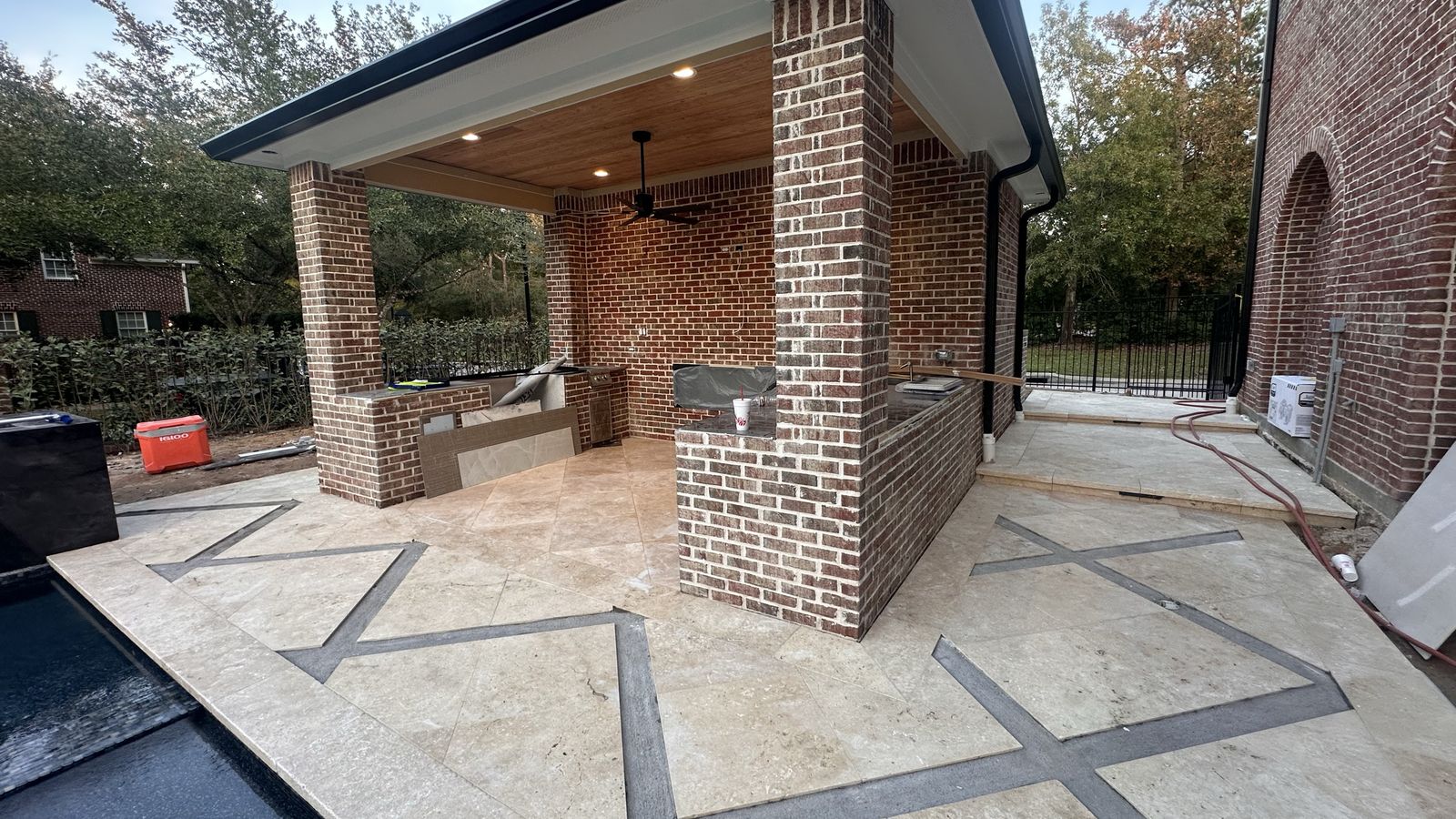
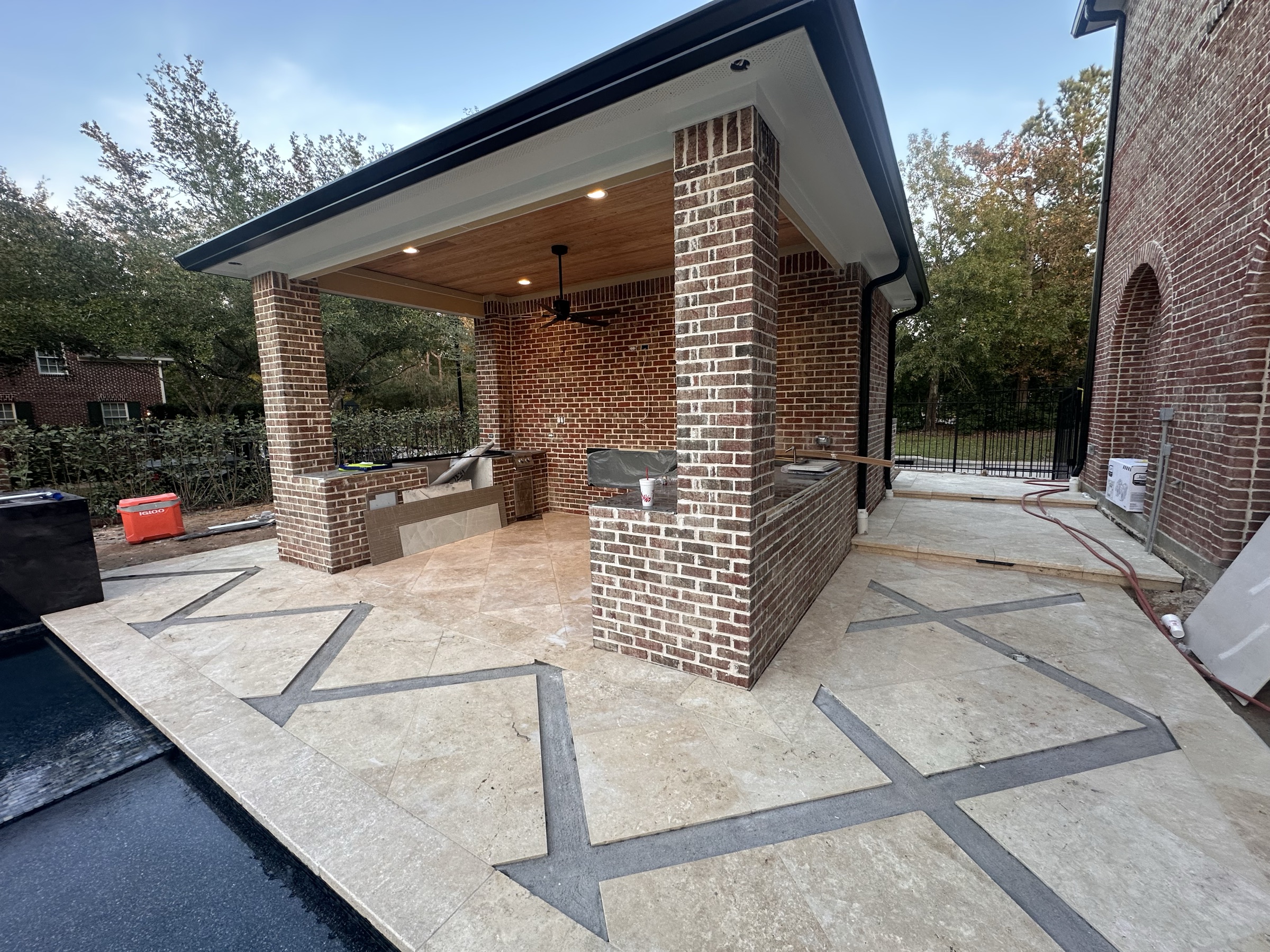
Natural stone has variation that manufactured products try to copy. Every travertine paver carries its own veining and tone, so a large deck reads as rich and layered instead of flat. It also plays well with brick, stone veneer and stucco, so it ties a pool deck into the house and any outdoor kitchen or cabana.
Pattern is where you can make it your own. A classic French pattern mixes paver sizes for an old-world look. Large-format pavers feel clean and modern. Inlays and borders, like the dark diagonal bands in the project above, turn the deck into a design feature.
A pool deck is not a driveway
Most of the travertine requests we get are for pool decks, and that is a different installation than a driveway. Here is what changes:
- Base: The deck does not carry cars, but it does sit next to a structure full of water. We compact a proper base so the stone stays flat over Houston's moving clay.
- Drainage: Water has to move away from the house and avoid washing dirt and debris back into the pool. Slope is planned before the first paver is set.
- Coping and edges: The pool edge takes the most abuse. Coping has to be set solid and matched to the deck.
- Joints: The right joint sand or setting method keeps pavers locked in place and weeds out.
Sealing and care
Travertine is a natural, porous stone. A quality sealer protects it from pool chemicals, sunscreen, oil and Houston's mineral-heavy rainwater. It also makes routine cleaning easy. Between sealings, a rinse and the occasional gentle cleaner is usually all it needs.
Natural pits and holes in travertine are part of its character. Filled travertine has those voids filled at the factory for a smoother look, while unfilled tumbled stone shows more texture. We walk you through both options before you choose.
Pair it with the rest of the yard
Travertine works beyond the pool. Many homeowners carry it onto the patio, the walkway to the house and the floor of an outdoor kitchen or cabana so the whole backyard reads as one design. See more options on our outdoor flooring page.
Thinking about a new pool deck? Browse our travertine paver projects or get a free quote.